
The Ski Standard Guide to Crans-Montana
An essential guide to skiing Crans-Montana, featuring 140km of sunny south-facing slopes, high-altitude glacier terrain, and practical tips for every budget.
Crans-Montana spreads 140km of pistes across a sunny plateau above Switzerland’s Rhône Valley. The villages sit at about 1,500m, with lifts climbing towards the Plaine Morte Glacier at around 3,000m and delivering roughly 1,400m of skiable vertical.
It is strongest for intermediates, but the glacier, World Cup pistes and lift-served freeride give advanced skiers enough substance for a week. Beginners have good learning areas, although some home runs are harder than the nursery slopes suggest. The main compromises are the spread-out resort layout, softening lower pistes in warm weather and prices that sit towards the expensive end of the Alpine market.
The skiing
Crans-Montana’s defining features are sunshine and long descents. The tourist office says all 140km of marked pistes face south, producing bright skiing and wide views across the Valais Alps. The same aspect exposes lower slopes to more sun, so altitude matters during warm spells and towards the end of the season.
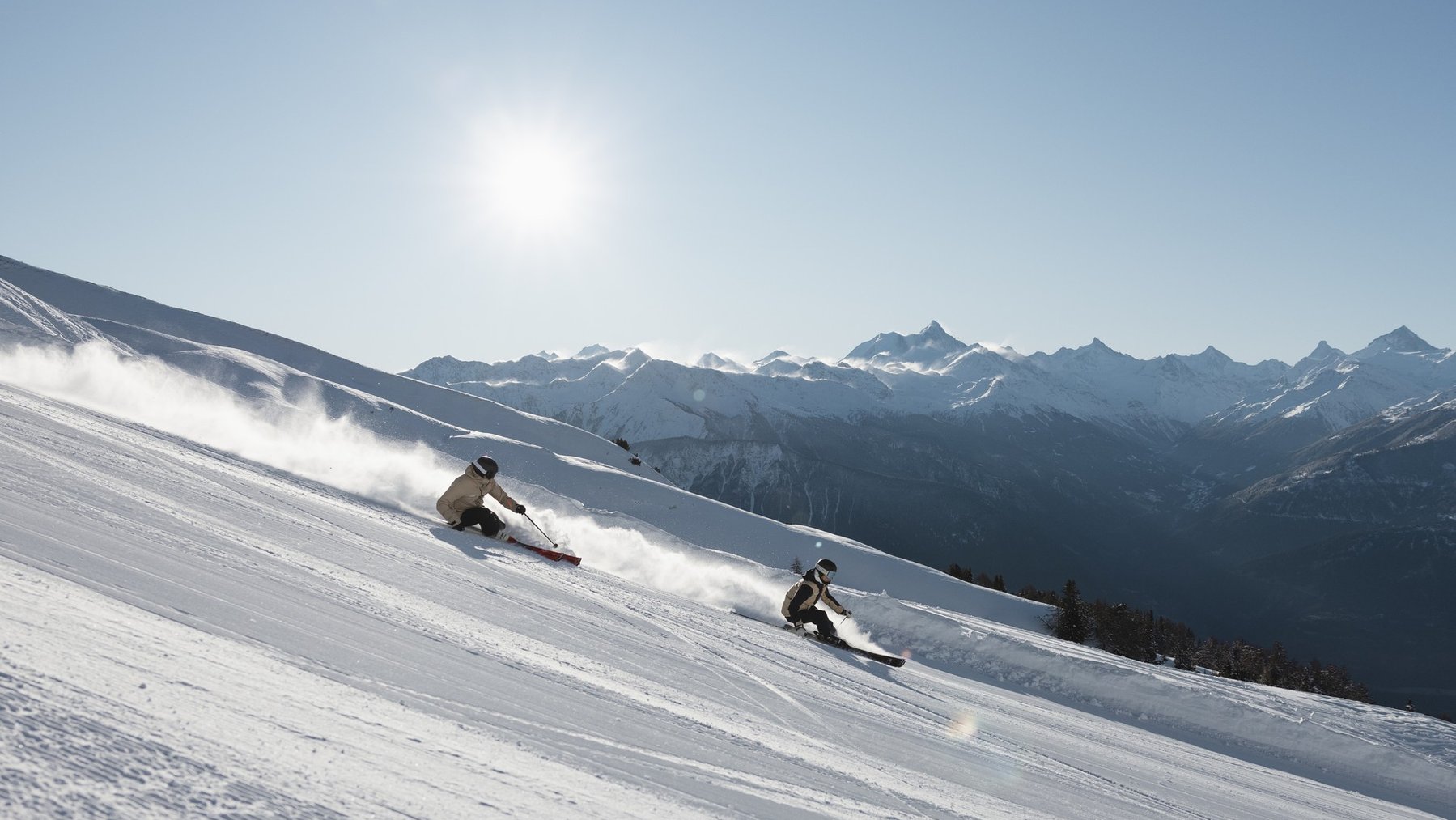
The mountain combines open glacier terrain with broad groomed pistes, woodland runs and freeride sectors. A published breakdown gives 40 per cent blue pistes, 50 per cent red and 10 per cent black. Runs of 8km or more are possible from the upper mountain towards the resort.
The main lift network is modern and generally efficient. Access is distributed between the Cry d’Er side, central Montana and the Violettes base at Barzettes. Violettes is the useful start for Toula and Plaine Morte, especially when fresh snow makes the glacier the obvious early target.
Queues are usually manageable. Powderhounds reported minimal waiting even during a busy weekend, although the Plaine Morte funitel attracted a queue on a sunny powder day. The more persistent frustration is navigation: lower intersections below Cry d’Er become busy late in the afternoon, while some links towards Aminona include flat sections that are awkward on a snowboard.
Snow reliability is strongest high up. The glacier, extensive snowmaking and an upper mountain largely above 2,000m support a normal season from late November into April. Vail Resorts installed 22 additional snow guns for 2025–26, but April coverage on the lower south-facing slopes remains vulnerable during warm weather.
A normal day might begin with cruising around Cry d’Er before moving across the mountain towards Petit Mont Bonvin or Les Violettes. Strong skiers can instead head directly for Toula, the glacier and the World Cup terrain. The breadth of the area means route planning pays off more than repeatedly returning to one central hub.
Best for beginners
Crans-Montana is beginner-friendly where its learning zones are concerned. Snow Island occupies the snow-covered golf course and can be reached on foot, so first-time skiers do not need to negotiate a gondola before their first lesson. It has gentle slopes and magic carpets, alongside tubing and other children’s activities.
Arnouva’s Snow Garten provides another controlled learning area, with three magic carpets. The Verdets button lift and its blue piste make a useful next step before moving onto the wider mountain. Lessons should be booked in advance.
Cry d’Er has the best concentration of gentle blue terrain for progressing beginners. The catch is returning home: some village descents are steeper than the upper blues, so nervous skiers should download by lift. The blues around Aminona are also unsuitable for new skiers because reaching them requires red-piste descents. The resort’s beginner guide recommends them only for skiers who can already turn and stop confidently.
Best for intermediates
Intermediates are the clearest fit for Crans-Montana. Wide blues around Cry d’Er build confidence, while the many long reds allow stronger skiers to cover the full area without running out of worthwhile terrain.
Kandahar and the pistes around Les Violettes provide sustained red skiing. Petit Mont Bonvin and Aminona are worth targeting when the central slopes become busier, although the flatter links reduce their appeal to snowboarders. Modern lifts make it possible to cover plenty of ground in a day, provided the piste map comes out before the final descent.
The resort suits skiers who prefer flowing, open pistes over a dense collection of short technical runs. Several days can pass before its main sectors start to feel repetitive.
Best for advanced skiers
Advanced skiers get World Cup pistes, glacier descents and substantial off-piste. The Nationale is the resort’s best-known black and hosted the men’s World Cup downhill in 2026, won by Franjo von Allmen. Mont Lachaux is another racing track, while Tubang and the black Kandahar descent provide further technical skiing.
Bella Lui has around 1,000m of off-piste vertical. Natural terrain also extends around Plaine Morte and Petit Mont Bonvin, with both open high-alpine lines and lower tree skiing. Avalanche equipment, suitable experience and a local guide are necessary away from secured pistes.
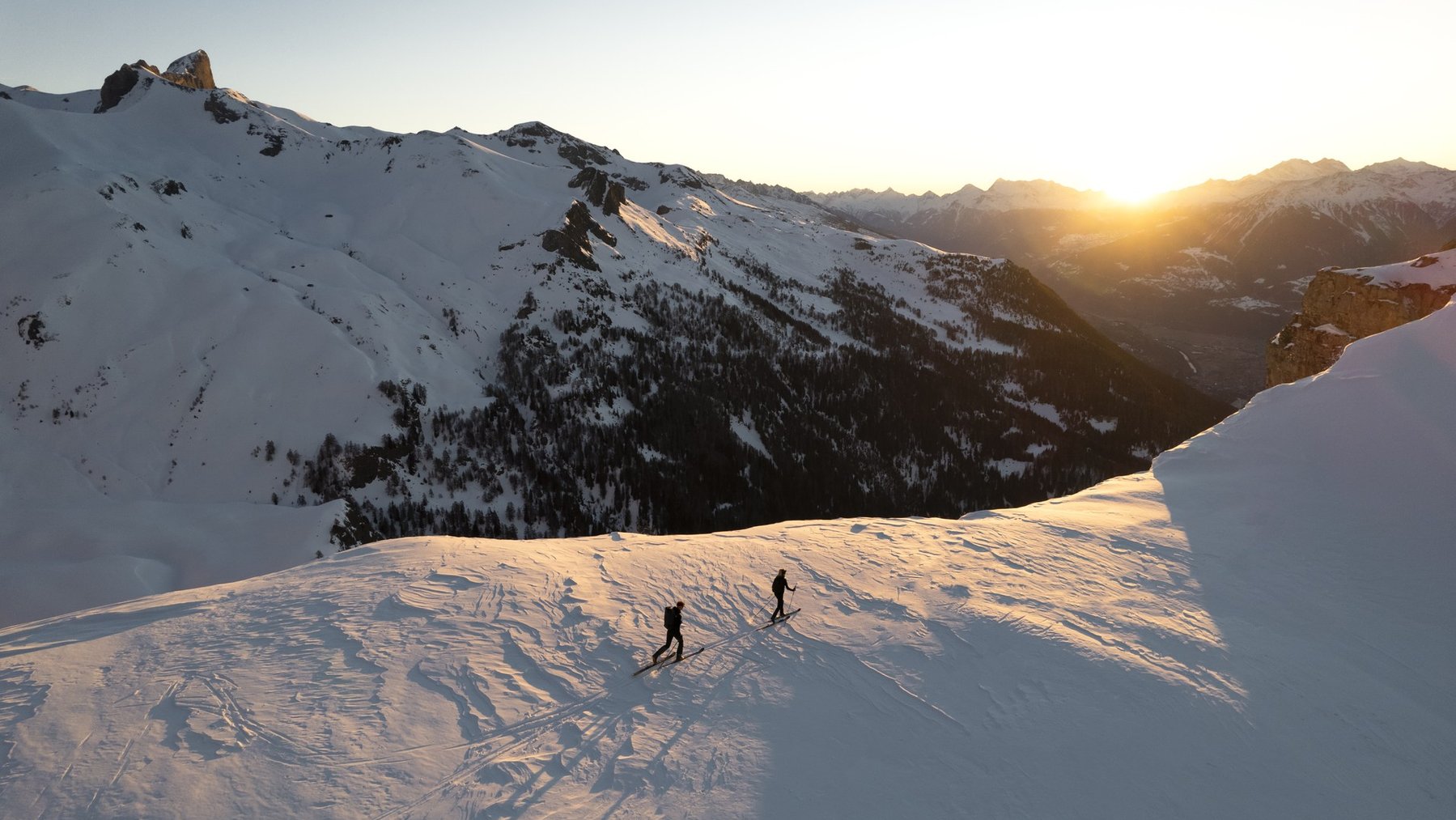
Tourers have access to the Rando Parc, which has 15 marked and secured uphill routes covering more than 40km. The routes range from an introductory 212m climb to harder ski-mountaineering objectives. Experts should have enough for a week when conditions allow access beyond the marked blacks, though the best powder sectors attract early demand.
Families and non-skiers
Snow Island is the most useful family facility because adults and children can reach it without a lift. Ski schools run children’s lessons and kindergarten programmes, while Croc’Montagne provides nursery care for visiting families.
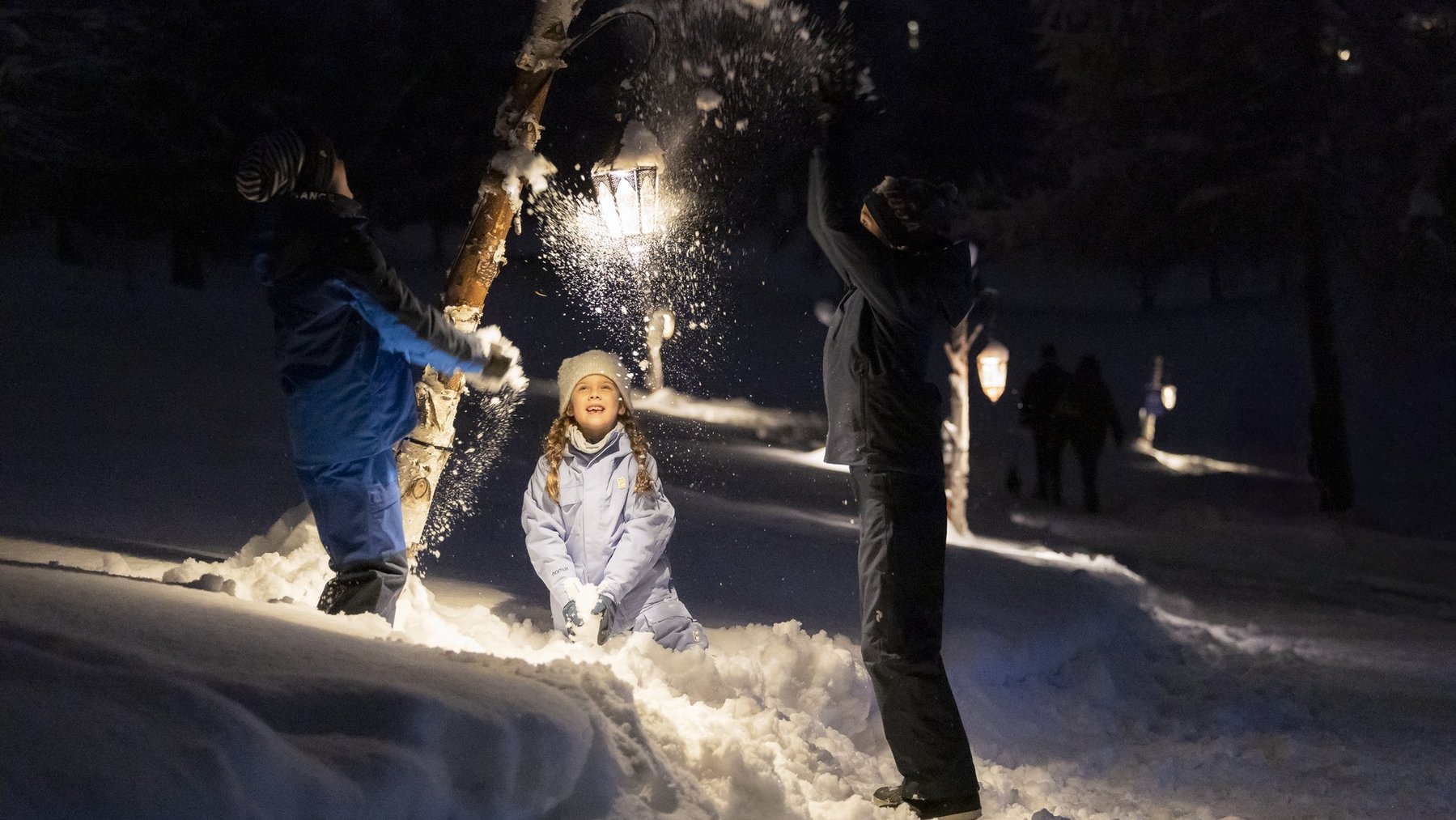
Non-skiers have more to do than in a small, lift-focused village. Options include the Ycoor Ice Rink, snowshoe routes, dog-sled rides and the illuminated Lantern Path between Lake Moubra and Lake Étang Long. Alaïa Club in nearby Lens has an indoor trampoline park and action-sports facilities for bad-weather days.
Pedestrian access to some mountain restaurants is possible, but the dispersed bases make location important. Families should prioritise accommodation near Snow Island, a regular bus stop or the lift used by their ski school.
Eating on the mountain
Cry d’Er’s self-service restaurant is the practical everyday stop, serving pasta, burgers and a daily special beside a large terrace. Chez Erwin is smaller and more traditional, with raclette, cold platters and homemade pastries. Cabane des Taules keeps things simpler still, serving soup and raclette when the weather permits.
For a destination lunch, Cabane des Violettes applies a more refined approach to local mountain cooking. Mayen de Colombire is the choice on the quieter Aminona side for traditional Valais dishes and cheese specialities.
Chetzeron, at 2,112m, is the upscale option. Its restaurant uses local produce in contemporary Alpine cooking, with a terrace overlooking the surrounding peaks. Booking is sensible for Chetzeron and Cabane des Violettes during busy weeks.
Après-ski and nightlife
Après starts on the mountain rather than waiting for dinner. Cry d’Er Club d’Altitude runs live music or DJs from about 3pm, while Zerodix at the bottom of the Crans gondola has a large terrace and a livelier atmosphere. Seven Burgers & Beers is the convenient choice for anyone finishing at Barzettes.
The villages offer cocktail bars, pubs, clubs and a casino. Monk’is Bar draws a younger crowd and stays open until around 2am, while Le Tirbouchon concentrates on local wine in a quieter setting. Crans-Montana feels more polished than a purpose-built party resort, but it has enough late-night venues for groups who want more than one slopeside drink.
The village
Crans and Montana began as separate towns and still feel like distinct neighbourhoods. Montana is the easiest arrival point because the funicular from Sierre terminates there. Crans has the designer shops, golf course and access towards Cry d’Er, while Barzettes is a smaller lift base with fast access to Violettes and Plaine Morte.
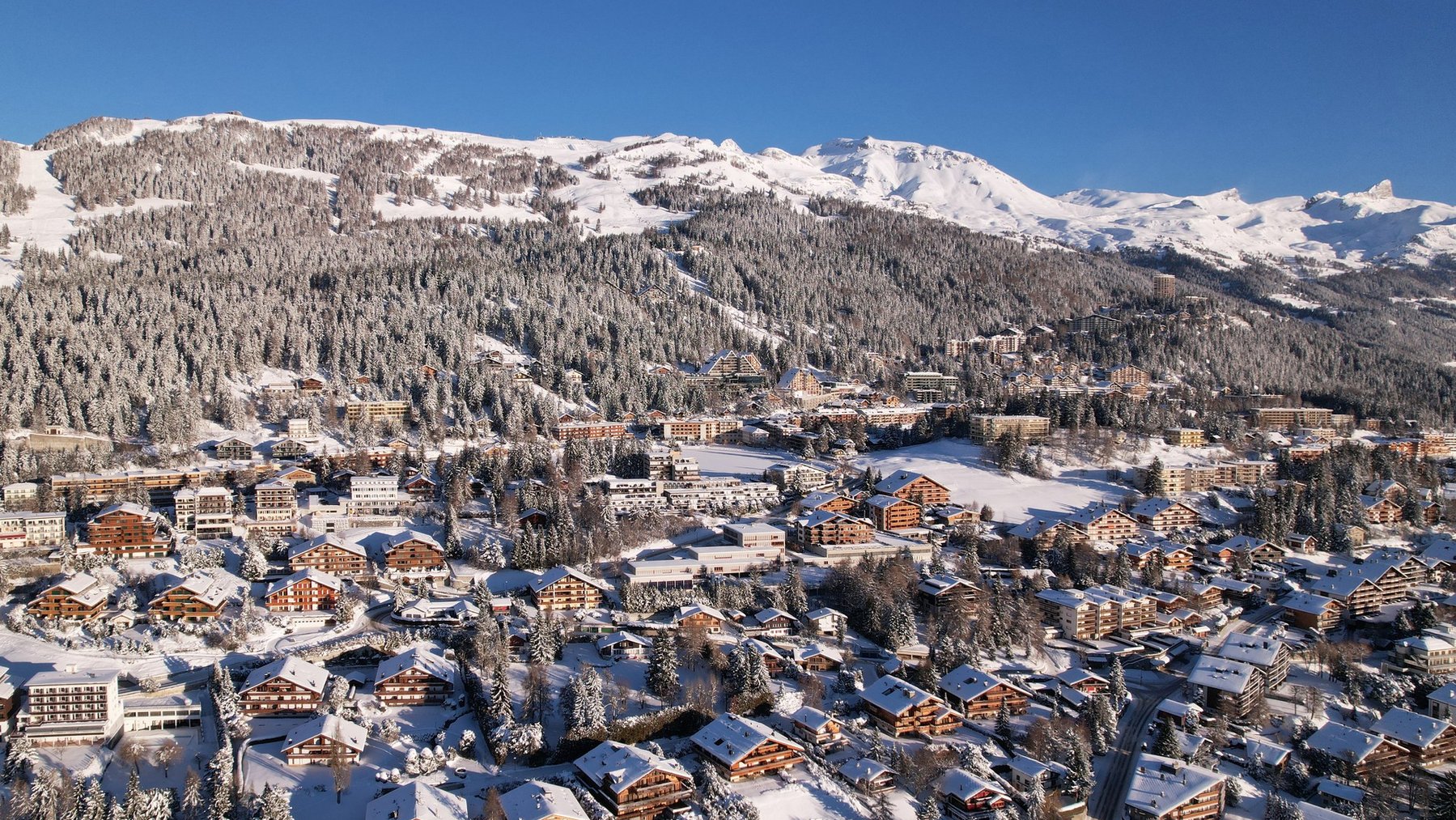
The plateau settlement is spread out: hotels, apartment buildings and commercial streets sit among lakes and patches of pedestrianised centre. Buses connect the main bases, but a badly located apartment can add a walk or bus journey at both ends of the ski day.
Crans has the strongest luxury identity and broadest shopping. Montana is more practical for rail travellers, while Barzettes suits skiers prepared to exchange nightlife and restaurant choice for quicker high-mountain access.
Where to stay
Accommodation ranges from a youth hostel to small owner-run hotels and five-star spa properties. These are the clearest choices by category:
- Best overall: Hotel Splendide. The owner-run hotel is around three minutes from central Crans and 400m from the cable car, balancing lift access with restaurants and shops.
- Best luxury: LeCrans Hotel & Spa. It has 15 rooms, three suites, indoor and outdoor pools and a Michelin-starred restaurant.
- Best value: Crans-Montana Youth Hostel. Housed in a historic hotel building, it has a restaurant, bar and terraces overlooking the mountains and lake.
- Best for families: Crans Ambassador. The five-star hotel has an indoor pool and family facilities, including children’s spa treatments from age three.
- Best self-catered: a central Montana apartment. This keeps the funicular, shops and buses within reach. Crans works better if Snow Island or the Cry d’Er gondola is the priority.
For direct slope access, Chetzeron is a 16-room hotel in a converted lift station at 2,112m. Winter guests reach it on skis, touring equipment or snowshoes, so it works better for committed skiers than mixed groups.
Getting there
Geneva is the main international airport, about 171km away and roughly two hours by car in good conditions. Zurich and Milan Malpensa are workable alternatives, while Sion is much closer but has a smaller flight network.
The simplest public-transport route is the train from Geneva Airport to Sierre/Siders, usually taking under two and a half hours. The funicular station is about 300m from the railway station, and the climb to Montana takes around 12 to 14 minutes. The official access information also lists bus connections from the valley.
A car is unnecessary when staying near the funicular, a gondola or a frequent bus route. It becomes useful for outlying accommodation and day trips, but parking and transfers between bases can offset that convenience.
What does Crans-Montana cost?
Crans-Montana is an upper-mid-range to expensive resort. Luxury hotels and high-end restaurants dominate its image, although apartments, the youth hostel and accommodation in Sierre provide cheaper ways to visit.
Lift passes use dynamic pricing, so the cost changes with the date, demand and purchase timing. The resort had not published usable 2026–27 prices in the supplied booking snapshot on 7 August 2026. For context only, the listed 2024–25 adult price was CHF56 for one weekday or CHF325 for six days, and those figures should not be treated as current. Buying online early is usually cheaper than paying at the ticket window.
Full Epic Pass holders receive unrestricted winter access, according to Vail Resorts, while access on other Epic products depends on the pass type. That can change the value calculation for anyone planning to ski at several Vail-owned resorts.
Food ranges from self-service mountain lunches to Michelin-starred dining, but the general price level is Swiss rather than budget Alpine. Early lift-pass booking, self-catering and a central location that avoids taxis are the most effective ways to control the total cost.
Cover image credit: maxime aliaga
Author · Places desk
Ryan Chambers
Ryan Chambers is the editor of The Ski Standard, covering equipment, resorts and the people who shape modern skiing.

